How Opposites Coexist Without Canceling Each Other Out
Explore how contradictory feelings, identities, and truths coexist without canceling each other out, drawing on psychology, philosophy, and relational research.
| Integration, Shadow Work, Wholeness, Self-Transcendence, Interconnection, Spiritual Autonomy, Legacy, Prospection, Memorialization, Emotional Contagion, Connection, Compassion, Intuition, Empathy, Social Intelligence, Affect Regulation, Emotional Intelligence, Consideration, Conflict Resolution, Wisdom, Decision-making, Meaning-Making, Communication, Mindful Listening, Understanding, Metacognition, Cognition, Sustainable Inner Peace, Lasting Contentment, Baseline Elevation, Profound Gratitude, Meaningful Contribution, Ikigai, Lifelong Learning, Kaizen, Natural Rhythm Cycles, Intentional Living, Resource Allocation, Conscious Creation, Self-Authorship, Authenticity, Personal Energy, Transformation, Identity, Consciousness, Trust In The Universe, Trust In Intimacy, Vulnerability, Trust In Inner Wisdom, Boundaries, Cognitive Reframing, Positive Inner Dialog, Resilience, Self-Care, Emotional Wellness, Self-awareness, Beginner's Mind, Self-Efficacy, Self-Actualization, Growth Mindset, Purpose, Passion, Drive, Motivation, Momentum, Need, Desire, Creative Expression, Behavioral Activation, Rejuvenating Rest, Flow, Perspective, Anxiety & Stress | 13 min read
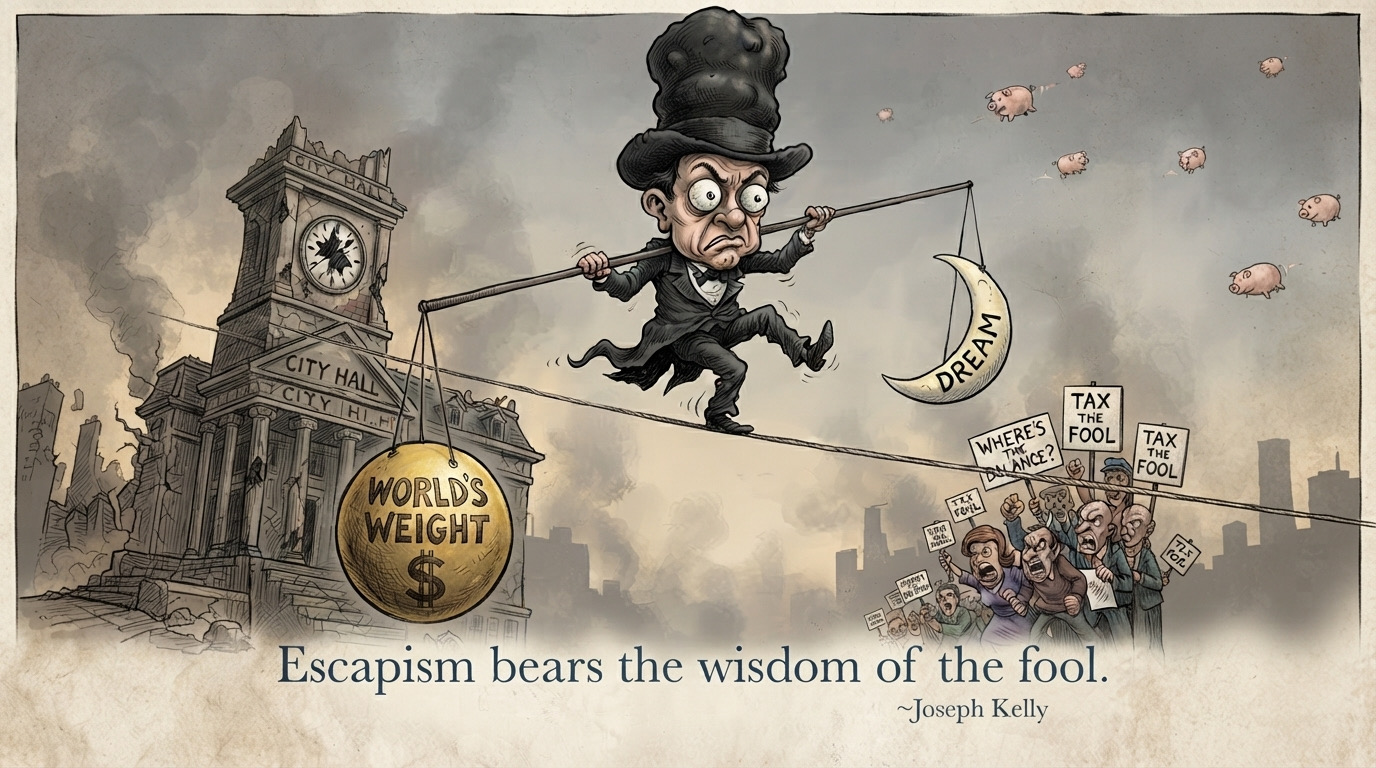
You can feel entirely certain about a decision and terrified of it at the same time. You can love someone and, in the same breath, resent them for something they haven't even done yet, only might do. You can be genuinely grateful for your life while grieving, with real weight, the life you didn't get to live. If you've ever paused mid-sentence because you noticed you were saying two contradictory things about your own experience within the same minute, you already know what this article is about. Most of us have been taught, quietly and without ever being told directly, that this is a problem to solve. That the contradiction means something is wrong, that one of the two feelings must be the real one and the other a mistake, a lapse, a symptom of confusion.
This article makes a different claim, one that draws from psychology, philosophy, and a fair amount of ordinary observation: opposites don't cancel each other out. They coexist. Not as a paradox to be resolved but as an accurate description of how complex minds, complex relationships, and complex lives actually work. Understanding this doesn't just relieve the pressure of feeling like you're doing your inner life wrong. It changes what maturity, wisdom, and even mental health can mean.
The myth of the single true feeling
Somewhere in the architecture of Western thought, a strong current took hold that treats emotional experience like a courtroom: only one verdict can stand. If you feel both love and anger toward your mother, the assumption goes, one of those feelings must be the truth and the other a distortion, perhaps a cover for something else, perhaps evidence you haven't fully forgiven her or fully accepted her. This binary logic runs deep in popular psychology, in the way we talk about closure, in the self-help language of choosing a side of an emotional ledger and staying there.
The trouble is, this logic doesn't match how emotion actually functions. Psychologist Jeff Larsen, along with colleagues studying what's called dialecticism in emotional life, has documented what they term mixed emotions or ambivalence, the simultaneous experience of positive and negative affect toward the same object. Larsen's research, building on earlier work by Norman Cacioppo and John Cacioppo on the evaluative space model, found that positive and negative feelings aren't opposite ends of a single dial that can only point one direction at a time. They run on partially separate neural and psychological systems. You can turn up the volume on affection and grief simultaneously because they're not actually competing for the same dial space.
This matters enormously for how you interpret your own inner weather. If you've stood at a funeral feeling both loss and something close to relief, or watched a child leave for college feeling both pride and a kind of quiet devastation, you weren't experiencing confusion. You were experiencing the actual texture of significant human attachment, which is rarely made of a single thread.
What Eastern philosophy noticed first
Long before Western psychology developed the vocabulary for ambivalence, several philosophical traditions built entire cosmologies around the coexistence of opposites. The Taoist concept of yin and yang, often flattened in Western pop culture into a decorative symbol, actually describes something precise: within the darkest point of yin lives a seed of yang, and within the brightest point of yang lives a seed of yin. Neither pole is pure. Neither cancels the other. They generate each other, continuously, through motion rather than static balance.
Similarly, the Japanese aesthetic and philosophical concept of mono no aware, the poignant awareness of impermanence, holds beauty and sorrow as a single unified perception rather than two separate reactions competing for dominance. When cherry blossoms are considered most beautiful, it's precisely because they're falling. The beauty isn't despite the loss; it's inseparable from it. This isn't melancholy dressed up as wisdom. It's an accurate observation that certain experiences only make sense when both their light and their shadow are held together.
Heraclitus, writing in ancient Greece roughly twenty-five centuries ago, arrived at something structurally similar through a different route. His famous observation that you cannot step into the same river twice points toward a universe built on the tension between opposites rather than their resolution. For Heraclitus, war and peace, up and down, the way up and the way down, were the same process viewed from different angles. Conflict wasn't a problem in his framework. It was the mechanism by which anything coherent came into being at all.
None of these traditions arrived at coexistence as a comforting platitude. They arrived at it because it more accurately described what they observed in nature, in human behavior, in the movement of the seasons. If ancient thinkers across unrelated cultures kept independently landing on the same structural insight, that's worth taking seriously as something other than coincidence.
Dialectical thinking as a developmental achievement
Developmental psychologists have found something quietly remarkable: the capacity to hold contradictory truths without needing to resolve them isn't a starting point. It's an endpoint, one that many adults never fully reach. Jean Piaget's early work on cognitive development established the groundwork, but it was later researchers, particularly those studying postformal thought, who identified what they call dialectical reasoning as a hallmark of advanced adult cognition.
Michael Basseches, whose research in the 1980s helped define this territory, described dialectical thinking as the capacity to recognize that contradiction is often not a sign of error but a feature of reality itself, particularly in domains involving relationships, identity, and values. A person operating with formal logical thinking alone tends to experience contradiction as a puzzle demanding resolution: if A is true, then not-A must be false. A person capable of dialectical thinking can hold that a relationship is both nourishing and constraining, that a career choice is both the right decision and a real loss, without treating either truth as canceling the other.
Marsha Linehan built an entire clinical framework around a version of this insight. Dialectical behavior therapy, developed initially for people experiencing intense emotional dysregulation, rests on the core principle that two seemingly opposing things can both be true: you are doing the best you can, and you need to do better. Acceptance and change aren't sequential steps where you finish one before starting the other. They function simultaneously, each making the other more possible rather than less. Linehan's clinical observation, borne out over decades of practice, is that people who try to choose only acceptance or only change tend to get stuck, while people who can hold both find more room to move.
What this suggests is that the discomfort you might feel when noticing contradictory truths in yourself isn't a sign of psychological immaturity. It's often closer to the opposite: an emerging capacity to see complexity that a simpler, more binary framework would have flattened.
Identity as a field, not a fixed point
One of the more persistent assumptions about selfhood is that a coherent identity requires internal consistency, that you should be able to describe yourself in a way that doesn't contradict itself. You're either introverted or extroverted, either ambitious or content, either someone who values independence or someone who values connection. Contemporary identity research complicates this considerably.
Psychologist Hazel Markus, working with Paula Nurius, introduced the concept of possible selves, the idea that identity isn't a single fixed structure but a field containing multiple, sometimes contradictory versions of who you might become. You can hold, at once, a feared self who ends up isolated and unfulfilled and a hoped-for self who builds something meaningful, and both versions actively shape your present behavior. Neither self cancels the other out. Their coexistence generates the motivational tension that moves you forward.
Similarly, self-complexity theory, developed by Patricia Linville in the 1980s, found that people who maintain multiple distinct facets of identity, rather than a single unified self-concept, tend to show greater resilience under stress. If you're only a parent, a setback in parenting threatens your entire sense of self. If you're also a colleague, a friend, a person who paints on weekends, a setback in one domain doesn't flood the whole system. This isn't fragmentation. It's a more accurate architecture of what a person actually is: not one thing, but several things occupying the same body at once, sometimes in tension, rarely in total agreement.
This has real implications for how you might think about identity questions during a transition, whether that's a career change, the end of a relationship, or simply a season where the person you thought you were doesn't quite fit anymore. You might find it useful to notice that you don't have to choose a single coherent narrative to feel stable. Stability can come from tolerating multiplicity rather than resolving it.
The relational version: love and conflict as the same current
Few places make the coexistence of opposites more visible than close relationships. John Gottman's decades of research on marital stability produced a finding that surprised many people expecting conflict to be the primary threat to lasting partnership: it isn't the presence of conflict that predicts relational breakdown, but the ratio of positive to negative interactions during conflict, and the presence or absence of specific corrosive patterns like contempt. Couples who last aren't couples who avoid disagreement. They're couples who can disagree while the underlying current of regard remains intact.
This means that love and friction aren't opposing forces fighting for control of a relationship. They often run through the same channel. The friction can be evidence that both people still care enough to push against each other rather than going quiet. Esther Perel, writing on desire and domesticity, has made a related observation: the security that makes long-term intimacy possible and the mystery that makes desire possible pull in genuinely different directions, and healthy relationships don't resolve this tension so much as learn to move within it. Comfort and eroticism, closeness and autonomy, aren't opposites to be balanced on a scale. They're two currents that need each other's ongoing presence, even as they pull against one another.
If you've ever felt confused by loving someone deeply while also, at times, wanting distance from them, this framework might offer some relief. The wanting-distance doesn't disprove the love. It might, in fact, be a normal expression of a self that hasn't disappeared into the relationship, which is itself a condition for the love remaining alive rather than becoming a kind of fusion that eventually suffocates both people.
Acceptance and Commitment Therapy's quiet radicalism
Steven Hayes, developing Acceptance and Commitment Therapy alongside colleagues beginning in the 1980s, built an entire clinical approach on a premise that sounds almost too simple until you sit with its implications: psychological suffering often comes not from difficult thoughts and feelings themselves, but from the struggle to eliminate them before acting on what matters to you. ACT doesn't ask you to resolve anxiety before living meaningfully. It asks you to hold anxiety and meaningful action in the same hand, walking forward while the discomfort walks alongside you rather than waiting for it to leave first.
This is a direct, practical application of opposites coexisting. You can feel afraid and still move toward what matters. You can feel unready and still begin. Hayes's research, along with subsequent studies on psychological flexibility, has found that the capacity to hold difficult internal experience without either suppressing it or being controlled by it correlates with better outcomes across a range of concerns, from generalized anxiety to chronic pain management. The skill being built isn't the elimination of one side of the pair. It's the capacity to carry both.
One practical entry point, drawn loosely from ACT's use of what's called cognitive defusion, involves noticing when you've collapsed a complex, dual experience into a single simplified story. If you catch yourself saying I can't do this because I'm too anxious, you might experiment with a slight rephrase: I'm anxious, and I'm doing this. The grammar itself does some of the work. It stops treating the anxiety as a gate that must be opened before movement is permitted, and starts treating it as weather you're moving through, present but not in charge of the destination.
Grief and gratitude in the same room
Perhaps nowhere does the coexistence of opposites become more viscerally real than in grief. Anyone who has lost someone significant knows the peculiar experience of laughing at a memory in the same conversation where tears arrive minutes later, sometimes minutes apart, sometimes at the exact same moment. Grief researcher George Bonanno's work on resilience after loss found that this oscillation, rather than being a sign of unresolved grief or denial, is a normal and even adaptive pattern. Bonanno's research identified what he calls the oscillation model, wherein healthy grieving involves moving back and forth between confronting the loss directly and taking breaks from it, engaging with ordinary life, restoring some sense of continuity.
This challenges an older model of grief that assumed stages needed to be completed in sequence before a person could be considered to have processed a loss. In practice, gratitude for a life shared and grief over its ending often don't take turns. They occupy the same territory simultaneously, sometimes for years. A person might feel both fully at peace with a parent's death and periodically undone by it a decade later, on an ordinary Tuesday, for no apparent reason. Neither experience disproves the other. Both are true accounts of an ongoing relationship with loss that doesn't have a finish line so much as a changing shape.
Why the brain resists this, and what helps
If holding opposites is so natural to complex experience, why does it feel so uncomfortable? Part of the answer lies in what psychologists call cognitive dissonance, a concept introduced by Leon Festinger in 1957. Festinger's research demonstrated that holding two inconsistent beliefs or feelings creates genuine psychological discomfort, and that people are strongly motivated to resolve that discomfort, often by distorting one of the two beliefs rather than tolerating the tension between them.
This explains a great deal of ordinary human behavior. It's often easier to convince yourself you never really loved someone than to sit with having loved them and been badly hurt by them at the same time. It's easier to decide a decision was entirely right or entirely wrong than to hold that it was both the necessary choice and a genuine loss. The mind, left to its own devices, often prefers a clean story over an accurate one.
What helps, according to research on distress tolerance and emotional granularity, is developing more precise language for internal states rather than collapsing them into a single verdict. Lisa Feldman Barrett's research on emotional granularity found that people who can name their emotional experience with more specificity, distinguishing between disappointment and betrayal, for instance, rather than lumping both into generic bad, tend to regulate difficult emotion more effectively. Naming both halves of an ambivalent experience, rather than forcing a single label onto it, appears to reduce rather than increase distress over time. In other words, the discomfort of contradiction often comes less from the contradiction itself and more from the pressure to resolve it prematurely.
What holding both actually looks like in practice
None of this suggests that every contradiction deserves equal weight or permanent residence. Some tensions genuinely do need resolution: a relationship that is mostly harm cannot be reframed into health through philosophical appreciation of complexity. The distinction worth making is between contradictions that reflect the genuine complexity of a situation and patterns that function as justification for staying somewhere that isn't serving you. Discernment still matters. Holding both truths doesn't mean treating them as equally actionable in every moment.
With that caveat in place, what does holding opposites actually look like day to day? It might look like telling a friend that you're proud of the choice you made and that you still feel the loss of the path you didn't take, without needing her to agree that one feeling is more legitimate. It might look like recognizing that you can be a generally confident person who also feels a specific, persistent doubt about one area of your life, without needing to resolve which version of you is real. It might look like allowing a piece of writing, or a relationship, or a decade of your life to have been both good and genuinely difficult, refusing the pressure to file it under one heading or the other for the sake of narrative tidiness.
Practically, this often starts with a small linguistic shift: replacing but with and. I'm grateful for this job, but I'm exhausted by it becomes I'm grateful for this job, and I'm exhausted by it. The word but tends to function as an eraser, quietly canceling whatever came before it. And leaves both halves standing. This isn't a trick of positive thinking. It's a more precise description of what's actually happening inside you.
The wider implication
There's a reason this territory sits at the center of what integration actually means. Integration doesn't mean smoothing contradictions into a single flat surface. It means building a self, a relationship, a life spacious enough to hold what's true even when what's true doesn't agree with itself. The philosopher and psychologist William James, writing over a century ago, observed that a mind able to hold multiple, even conflicting, ideas in view without collapsing into premature certainty was closer to intellectual maturity than one that rushed toward resolution. The same might be said of emotional and relational life.
If you've spent time feeling like your contradictions were evidence of something unresolved in you, it might be worth considering a different possibility: that the contradiction is the resolution. Not a resolution in the sense of an ending, but in the older sense of the word, a high-resolution image, one detailed enough to include what a simpler picture would have left out. The question that remains, and that probably doesn't have a final answer, is which of your own contradictions you've been quietly trying to solve when they might simply be asking to be seen.
Keep reading
- The Zeus in You: Why the Old Gods Still Describe the Mind
- Why I Am Guilty of Having No Shame
- The Unflappable You: How to Stop Letting Others Ruffle Your Feathers
- Don't Assume the Worst; Talk to Me About It First
- Possible vs. Probable: Why the Difference Shapes a Life
- Why Old Advice Suddenly Makes Sense Years After You Heard It
- Accept Belonging & Belong Acceptance
- Marcus Aurelius and Rumi: Two Paths to the Same Peace