Peace: The Sacred Crossroads Where Understanding and Being Understood Meet
Explore the profound intersection where our twin desires to understand and be understood converge, creating the sacred space where free will and conscious choice emerge.
| Communication, Integration, Wholeness, Interconnection, Self-Transcendence, Spiritual Autonomy, Connection, Social Intelligence, Emotional Intelligence, Compassion, Empathy, Intuition, Consideration, Decision-making, Perspective, Wisdom, Meaning-Making, Mindful Listening, Understanding, Metacognition | 12 min read
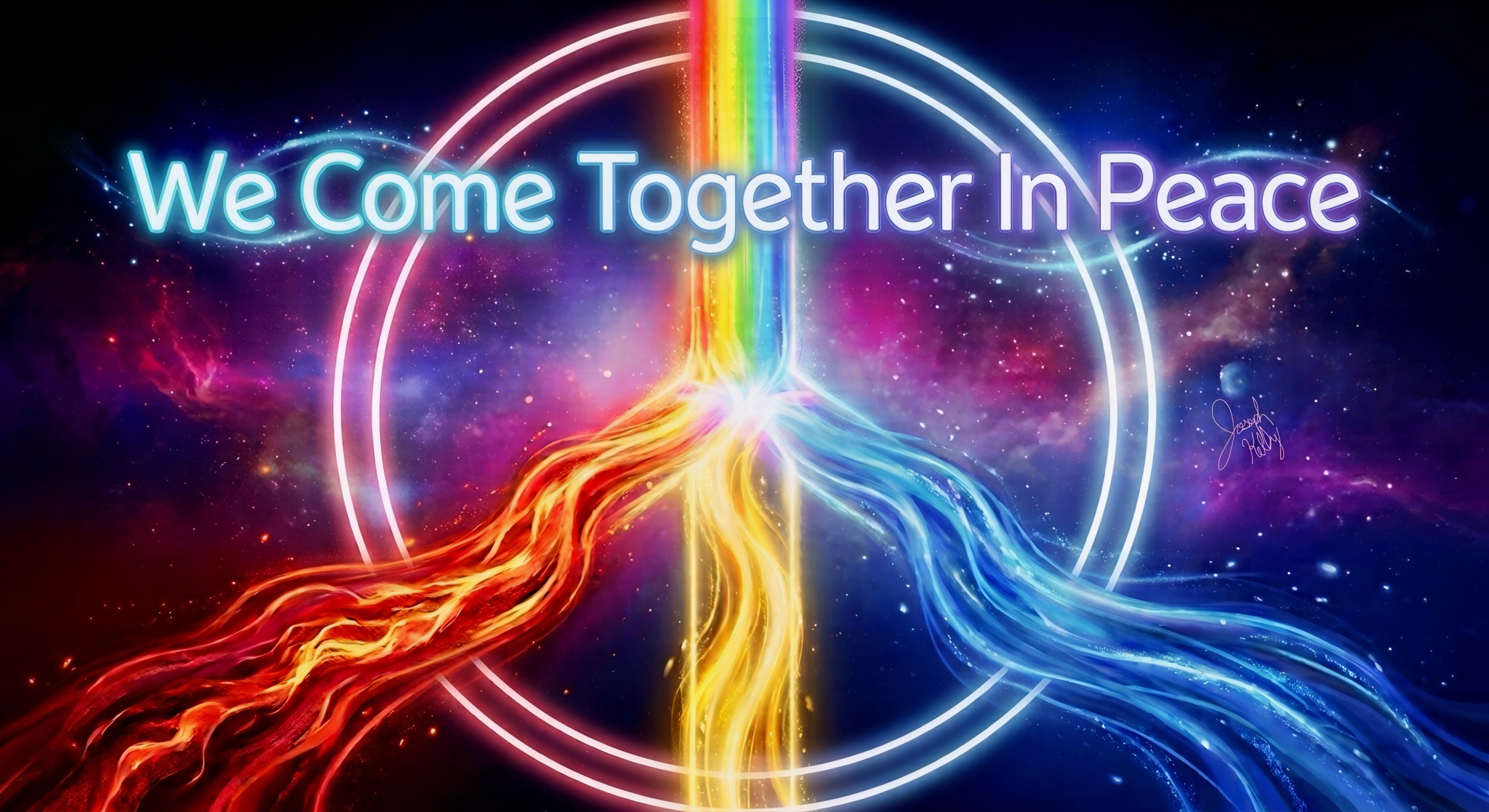
In the vast theater of human consciousness, there exists a sacred crossroads, a luminous intersection where our deepest yearnings converge. Here, two fundamental desires of the human spirit meet: the burning need to understand and the equally profound longing to be understood. This convergence point represents far more than a simple meeting of communication pathways; it is the very nexus where executive function, cognitive processing, and both expressive and receptive communication unite in a dance of conscious awareness.
Within this sacred space, this pause between stimulus and response, between thought and action, lies the birthplace of our most human capacity: free will. It is here that conscious choice first draws breath, where deliberation takes root, and where the seeds of determination and decisive action germinate in the fertile soil of discernment.
The Architecture of Our Twin Desires
To comprehend the magnitude of this crossroads, we must first examine the twin desires that create it. The human need to understand emerges from our evolutionary heritage as pattern-seeking beings. We are creatures who find meaning through connection, who seek to map the terrain of reality through understanding its contours and relationships. This drive extends beyond mere survival, it represents our deepest spiritual hunger to know ourselves and our place in the cosmos.
The complementary desire to be understood springs from our fundamental nature as social beings. We yearn not merely to exist, but to be witnessed in our existence. To be understood is to have our inner world acknowledged, our experiences validated, and our humanity recognized. This desire transcends the simple transmission of information; it seeks the sacred recognition of one consciousness by another.
The Neuroscience of Understanding
Modern neuroscience reveals that these twin desires activate overlapping neural networks that span multiple regions of the brain. When we engage in the act of understanding, whether attempting to comprehend a concept or striving to be understood by another, our prefrontal cortex, temporal lobes, and limbic system create a symphony of electrical activity. This neurological orchestra generates what we might call the consciousness of connection.
The anterior cingulate cortex, often called the brain's "empathy center, " becomes particularly active during moments when we're simultaneously trying to understand another person while hoping they understand us. This region serves as a bridge between cognitive and emotional processing, creating the perfect neural environment for the emergence of conscious choice.
Executive Function: The Master Conductor
At the heart of our crossroads stands executive function, the master conductor of conscious experience. This sophisticated system encompasses working memory, cognitive flexibility, and inhibitory control. But in the context of our twin desires, executive function takes on an even more profound role: it becomes the mediator between understanding and being understood.
When we encounter a moment requiring both comprehension and expression, our executive function must orchestrate multiple processes simultaneously. It must:
- Hold relevant information in working memory while processing new input
- Flexibly shift between perspectives to understand others while maintaining our own viewpoint
- Inhibit automatic responses to create space for deliberate choice
- Coordinate the expression of our inner experience in ways others can understand
This orchestration requires what we might call cognitive courage, the willingness to remain present in the tension between not knowing and not being known, while actively working toward mutual understanding.
The Pause That Changes Everything
Within this executive orchestration lies perhaps the most crucial element: the pause. This is not merely a gap in activity, but a pregnant moment filled with potential. In this pause, before reflexive reaction takes hold, we encounter what Viktor Frankl described as the space between stimulus and response, the space where our freedom lies.
This pause is where our twin desires create their most profound intersection. In wanting to understand, we must pause to listen, to process, to integrate. In wanting to be understood, we must pause to reflect, to choose our words, to consider how our inner experience might be received by another consciousness. This double pause creates a unique form of awareness, a meta-consciousness that observes both our need to comprehend and our need to be comprehended.
Expressive Communication: The Bridge Outward
Expressive communication represents our attempt to build bridges from the island of our inner experience to the mainland of shared understanding. But at our sacred crossroads, expressive communication becomes more than mere information transfer, it becomes an act of faith, hope, and vulnerability.
When we express ourselves with the dual intention of sharing our truth and understanding the other, we engage in what might be called conscious expression. This form of communication requires us to:
- Access our authentic inner experience
- Translate that experience into symbols and language
- Consider how those symbols might be received and interpreted
- Remain open to feedback and adjustment
- Hold space for the other's response and perspective
This process demands enormous cognitive resources and emotional courage. It requires us to simultaneously look inward to access our truth and outward to understand our audience, a complex dance of attention that can only occur in the space of conscious awareness.
The Art of Vulnerable Expression
At the crossroads of understanding, expressive communication often requires vulnerability, the willingness to be seen and potentially misunderstood. This vulnerability is not weakness; it is the strength required to remain authentic while seeking connection. When we express ourselves from this sacred space, we offer not just information but invitation, an invitation for another consciousness to meet us in understanding.
Research in interpersonal neurobiology suggests that when we communicate from a state of integrated awareness, simultaneously self-aware and other-aware, we actually activate mirror neuron systems in our listeners. This creates a resonance field where understanding becomes not just cognitive but embodied, felt, and deeply received.
Receptive Communication: The Art of Sacred Listening
If expressive communication is the bridge outward, receptive communication is the art of creating landing spaces for others' expressions. At our crossroads, receptive communication transcends passive listening to become active presence, a form of consciousness that creates safe harbor for another's truth.
Sacred listening requires us to temporarily set aside our own need to be understood in service of understanding another. This doesn't mean abandoning our perspective, but rather expanding our awareness to hold multiple perspectives simultaneously. It demands what psychologist Carl Rogers called "unconditional positive regard", a stance of openness that says, "I am here to understand you, even if I don't yet agree with you."
The Neurobiology of Deep Listening
When we listen with full presence, our brains activate what neuroscientist Dan Siegel calls the "resonance circuits." These networks allow us to feel into another person's experience while maintaining our own center. The insula, a brain region associated with interoception and empathy, becomes particularly active during moments of deep listening.
This neurological attunement creates what we might call intersubjective space, a field of shared awareness where understanding can emerge that belongs neither entirely to the speaker nor the listener, but to the relationship itself. In this space, our twin desires find their most profound fulfillment: we understand and are understood simultaneously.
The Sacred Space: Where Free Will Is Born
The convergence of these elements, our twin desires, executive function, expressive and receptive communication, creates what we might call the sacred space of consciousness. This is not a physical location but a state of awareness characterized by presence, choice, and possibility.
In this space, free will is not an abstract philosophical concept but a living reality. It is the direct experience of being able to choose our response based on understanding rather than react from conditioning. This freedom emerges from the pause we create when we simultaneously seek to understand and be understood.
The Elements of Sacred Space
This sacred space has distinct characteristics that distinguish it from ordinary consciousness:
- Presence: Full attention to the current moment and interaction
- Curiosity: Genuine interest in understanding what is not yet known
- Vulnerability: Willingness to be seen and potentially misunderstood
- Patience: Tolerance for the time it takes for true understanding to emerge
- Courage: The strength to remain open when understanding is challenging
- Discernment: The wisdom to distinguish between different qualities of understanding
When these elements converge, we create conditions for what the philosopher Martin Buber called "I-Thou" encounters, meetings between consciousnesses that transform both participants.
Deliberation, Determination, and Decisive Action
From this sacred space emerge three crucial capacities that define conscious choice: deliberation, determination, and decisive action. Each represents a different aspect of how free will manifests in the world of form and relationship.
Deliberation: The Dance of Perspectives
Deliberation in the sacred space is not mere mental calculation but a form of embodied wisdom. It involves holding our understanding of self and other, of past and future, of intention and consequence, in dynamic tension. This process requires what we might call cognitive empathy, the ability to understand multiple perspectives simultaneously without losing our center.
In deliberation, we engage both our analytical and intuitive capacities. We consider not just the logical implications of our choices but their emotional, relational, and spiritual dimensions. This holistic approach to decision-making is only possible when we've created the pause necessary for deep consideration.
Determination: The Crystallization of Will
Determination represents the moment when possibility crystallizes into intention. In the context of our twin desires, determination emerges when we've achieved sufficient understanding, of ourselves, others, and the situation, to commit to a particular course of action. This commitment is not rigid but flexible, informed by understanding and open to new information.
True determination in the sacred space carries what we might call ethical gravity, a sense of responsibility for the consequences of our choices. When we determine to act from understanding, we accept accountability for both our desire to comprehend and our need to be comprehended.
Decisive Action: Manifestation in Form
Decisive action is where consciousness meets world, where inner understanding becomes outer expression. At our sacred crossroads, decisive action is never merely about getting what we want but about acting in ways that honor both our need to understand and be understood.
Such action carries what the ancient Greeks called phronesis, practical wisdom that considers not just effectiveness but appropriateness, not just success but significance. When we act from the sacred space, our actions become expressions of our highest understanding and invitations for others to meet us there.
Discernment: The Root of Wisdom
All of this culminates in discernment, the capacity to distinguish between different qualities of understanding and different levels of consciousness in communication. Discernment is what allows us to recognize when we're operating from the sacred space and when we've fallen into more reactive patterns.
Discernment involves several key capacities:
- Quality Recognition: The ability to distinguish between surface and depth in communication
- Timing Sensitivity: Knowing when to speak and when to listen, when to push and when to pause
- Intention Clarity: Understanding our true motivations for seeking to understand and be understood
- Impact Awareness: Recognizing the effects of our communication on others and ourselves
- Authenticity Detection: Sensing when expression is genuine versus performative
The Cultivation of Discernment
Discernment is not a natural talent but a cultivated capacity. It grows through practice, reflection, and the willingness to learn from both successful and failed attempts at mutual understanding. Each time we enter the sacred space with conscious intention, we strengthen our capacity for discernment.
This cultivation requires what we might call contemplative practice, regular moments of reflection on our communication patterns, our defensive strategies, and our deepest desires for connection. Through such practice, we develop what the Buddhist tradition calls "right speech", communication that serves understanding rather than ego.
The Transformation of Relationship
When two or more people consistently meet at this sacred crossroads, each bringing their desire to understand and be understood into conscious awareness, relationships undergo profound transformation. Communication becomes not just functional but sacred, not just informative but transformative.
Such relationships are characterized by:
- Mutual Recognition: Each person sees and acknowledges the consciousness of the other
- Shared Vulnerability: Both parties risk being known and potentially misunderstood
- Co-Creative Understanding: Meaning emerges through relationship rather than being imposed by individuals
- Evolutionary Growth: Both participants are changed through the encounter
- Sacred Witnessing: Each person serves as conscious witness to the other's truth
These relationships become laboratories for the development of consciousness, spaces where free will can be exercised in service of mutual understanding and growth.
Implications for Personal Development
Understanding this sacred crossroads has profound implications for personal growth and development. It suggests that our capacity for free will and conscious choice is not fixed but can be cultivated through practices that strengthen our ability to understand and be understood.
Practical Applications
Several practices can help us more consistently access and operate from this sacred space:
- Mindful Communication: Bringing conscious awareness to our communication patterns
- Empathetic Inquiry: Asking questions designed to deepen understanding rather than confirm our assumptions
- Reflective Expression: Taking time to understand our own experience before attempting to share it
- Contemplative Dialogue: Engaging in conversations designed for mutual exploration rather than persuasion
- Somatic Awareness: Paying attention to the physical sensations that accompany understanding and being understood
Each of these practices strengthens our capacity to create and maintain the pause necessary for conscious choice, helping us develop what we might call communication mastery, not the ability to manipulate others but the skill to create conditions for mutual understanding.
The Larger Implications for Humanity
The individual capacity to operate from this sacred crossroads has implications that extend far beyond personal relationships. As more people develop the ability to hold the tension between understanding and being understood, we create the possibility for what evolutionary biologists call emergent properties, qualities that arise from the interaction of conscious beings that transcend what any individual could achieve alone.
This suggests that our twin desires, when brought into conscious awareness and skillful expression, serve not just personal growth but collective evolution. Each moment we choose understanding over reaction, connection over separation, we contribute to what Pierre Teilhard de Chardin called the "noosphere", a field of shared consciousness that encompasses and transcends individual awareness.
A Vision of Conscious Communication
Imagine communities, organizations, and even nations that prioritize the cultivation of this sacred space in communication. Rather than debates designed to win, we might have dialogues designed to understand. Rather than negotiations based on power, we might have collaborations based on mutual recognition.
This is not utopian thinking but practical wisdom applied to collective challenges. The skills required to operate from the sacred crossroads, presence, curiosity, vulnerability, discernment, are the same skills needed for addressing complex social, environmental, and spiritual challenges facing humanity.
Conclusion: The Eternal Return to Sacred Space
The sacred crossroads where our twin desires meet is not a destination we arrive at once and inhabit forever. It is a space we must consciously choose to enter, again and again, in each moment that calls for understanding and the courage to be understood. It is a practice rather than an achievement, a way of being rather than a technique to master.
In this space, we discover that free will is not the freedom to do whatever we want but the freedom to respond from our highest understanding. We learn that consciousness is not a private possession but a shared field of awareness that emerges through genuine meeting between minds and hearts.
The pause we create at this crossroads, the sacred space between stimulus and response, becomes a gift we offer not only to ourselves but to all those whose lives we touch. In choosing to understand and risking being understood, we create ripples of consciousness that extend far beyond our individual experience.
Perhaps this is the ultimate teaching of the sacred crossroads: that our deepest desires are not separate from but in service of something larger than ourselves. In seeking to understand and be understood, we participate in the larger project of consciousness knowing itself through relationship, of love expressing itself through communication, of wisdom emerging through the courage to meet each other in the full vulnerability and dignity of our shared humanity.
Every conversation becomes an opportunity to practice, every relationship a laboratory for consciousness, every moment of misunderstanding a chance to return to the sacred space where free will breathes and choice is born. This is both our greatest challenge and our most profound gift, the ability to create understanding where there was confusion, connection where there was separation, and conscious choice where there was only reaction.
In the end, the twin desires that create our sacred crossroads are not just personal longings but evolutionary impulses, drawing us toward ever-greater levels of consciousness, compassion, and connection. They are the very forces that transform isolated individuals into a community of conscious beings, capable of understanding not just each other but the larger patterns of meaning and purpose that give life its deepest significance.
Keep reading
- The Zeus in You: Why the Old Gods Still Describe the Mind
- Why I Am Guilty of Having No Shame
- The Unflappable You: How to Stop Letting Others Ruffle Your Feathers
- Don't Assume the Worst; Talk to Me About It First
- Possible vs. Probable: Why the Difference Shapes a Life
- Why Old Advice Suddenly Makes Sense Years After You Heard It
- Accept Belonging & Belong Acceptance
- Marcus Aurelius and Rumi: Two Paths to the Same Peace