How Yellow & Blue Make Green: The Difference Between Awareness and Thinking
Read "How Yellow & Blue Make Green: The Difference Between Awareness and Thinking" on Joseph Kelly's site.
| Consciousness, Identity, Personal Energy, Self-Authorship, Cognition, Metacognition, Understanding, Meaning-Making, Communication, Perspective | 19 min read
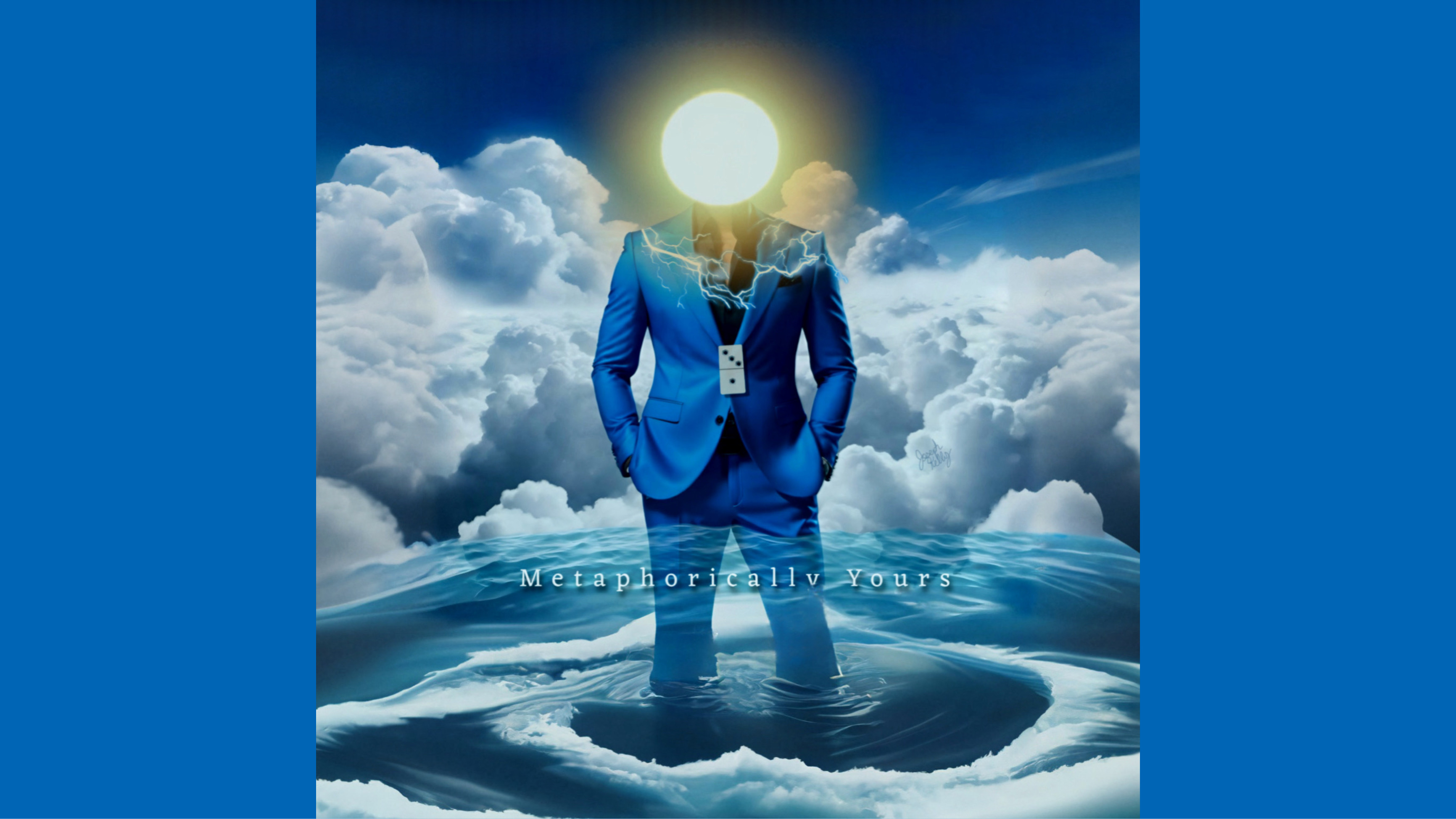
“For you, I’d bleed myself dry”
-Coldplay, Yellow
'It is Blue; It is not about you”
-Stevie Nicks. Bombay Sapphires
There's a particular moment, sometimes in the middle of a shower, sometimes halfway through a walk, when you catch yourself thinking. Not the thought itself. The catching. Something in you noticed that a thought was happening, and in the noticing, the thought loosened its grip. If you tried to describe what did the noticing, you'd find it slippery. It wasn't another thought. It wasn't a feeling. It was closer to a light coming on in a room you didn't know was dark.
A beat later, something stranger happens. You notice that you noticed. Two entirely different events just occurred, one right after the other, and English hands you almost the same word for both. You say "I'm aware that I'm thinking," and the sentence flattens two distinct realities into a single verb.
Most of us live entire lives without carefully separating that noticing from the noise it observes. We call them both "mind" and move on. Language collapses them. You say "I was just thinking" and mean two entirely different phenomena in the same breath: the one who was thinking, and the thinking that was being done. These are not the same, and the confusion between them shapes almost everything about how you experience being a person.
In the language of the Growing Light Series, they belong to two different colors on the visible spectrum. Yellow is the light of consciousness itself: awareness, presence, the "I am" that persists across every changing state. Blue is the cognitive mind: thought, language, categorization, the moving currents of consideration that carry meaning from one mind to another. They live so close together in ordinary vocabulary that most people cannot cleanly tell them apart. The difference matters. It matters for how you understand yourself, how you speak to your own suffering, and how you notice, in the moments that count most, that you are not, in fact, your thoughts.
Naming the Territory
Somewhere in the last four centuries, awareness and thought got welded together in the Western imagination. Descartes gets the credit or the blame, depending on how you read him: I think, therefore I am. The line is famous because it feels self-evidently true. Look at it closely, though, and something odd appears. Descartes did not say "I am aware, therefore I am." He said "I think." He made cognition the proof of existence.
In his own hands, the statement functioned as an epistemological argument, a way of finding one fact that couldn't be doubted. It has been misread for four centuries as something larger: an ontological claim that identifies existence with thought. Contemplative traditions have argued for a much longer time that the misreading runs backward. You don't exist because you think. You think because you already exist as an aware being. The thinking is a movement that happens inside awareness. The awareness came first, and it doesn't stop when the thinking stops.
If you take the Cartesian misreading seriously, you become your commentary. You become the noise. When the noise turns cruel, as it periodically does for everyone, you have no ground to stand on other than the very thing that's attacking you. This is one of the oldest confusions in human psychology, and probably the most consequential.
Yellow: The Light You See By
Yellow, in the spectrum work of Powerful Shifts: Identity in Motion, is not primarily a color of the mind. It's a color of being. It corresponds to the sun in the ancient elemental imagination: the source rather than the medium, the light itself rather than what light passes through. When you sit quietly and simply notice that you exist right now, that noticing is happening in yellow. It has no content of its own. It illuminates content.
Think of a room after sunset. You flip a switch and the room fills with light. The light is not the chair, the wall, or the photograph on the shelf. It is what allows the chair, the wall, and the photograph to appear at all. Try to describe the light in isolation, without describing what it lands on, and language begins to fail. The light is presuppositional. It is the condition of visibility itself.
This is the closest working description of consciousness available in ordinary language. Philosophers of mind like David Chalmers have spent decades on what he famously called the hard problem: why there is any felt quality to experience at all, why anything is "like something" from the inside. Whatever answer eventually emerges, the phenomenon itself is undeniable. There is a light on in you. You are, right now, having an experience.
Physiologically, this light appears to depend on a network of structures rather than a single organ. The reticular activating system in the brainstem regulates wakefulness. The thalamus routes and integrates sensory information. Research on the neural correlates of consciousness, including Giulio Tononi's integrated information theory and Bernard Baars's global workspace theory, points toward consciousness as an integrated field property of the brain rather than a specific location. Damage the wakefulness circuits and the light goes out even when the machinery of thought is intact. In deep coma, someone can retain functioning cortical tissue and yet no one is home. Yellow requires certain conditions to shine, but it is not identical to any of them. It is what happens when those conditions are met.
In identity terms, yellow is the "I am" beneath all the "I ams." You have said "I am tired," "I am a teacher," "I am afraid," "I am forty-three years old." Every one of those sentences begins with a word that outlasts the predicate. The tiredness passes. The teaching career changes. The fear resolves. The birthdays keep counting. The "I am" persists. That persistence is not a thought about yourself. It is closer to what remains when thoughts about yourself finally go quiet.
This is why Powerful Shifts uses the constellation as its central image for identity. A constellation is a pattern of points of light, each distinct, holding their relationship to one another as everything else moves. Your identity, in this yellow sense, isn't a single fixed thing you inherited. It's a recognizable configuration of awareness held together across time. The constellation shifts as you shift, but the light itself, the fact of your presence to your own life, remains continuous.
Universal truth in this yellow register does not mean a set of propositions everyone has to agree to. It means the underlying condition against which any truth can appear, the light by which the truth becomes visible. Two people looking at the same object don't disagree about the fact of the object's existence. They disagree about what to make of it, and that disagreement happens later, higher up the stack, in blue. Yellow is not the sentence. Yellow is the possibility of a sentence being read at all.
You've likely met this yellow directly, even if no one ever gave it a name. Picture the last time you sat with someone you love while they slept, a child, a partner, a parent in a hospital bed. You weren't thinking anything in particular. You weren't solving anything. You were simply present to the fact of them, and to the fact of yourself being present to them. Nothing needed to be said or figured out. That quiet, wordless attending is yellow with nothing added to it, and most people can recall a version of that moment without any instruction on how to find it. It was already there. You just don't usually stop long enough to notice you're standing in it.
Blue: The Air You Think In
Blue is different in kind. In elemental philosophy, air is the medium of movement, exchange, and communication. It carries. It transmits. It circulates between beings. Where yellow is source, blue is flow. Where yellow is presence, blue is process. Blue is the cognitive mind: the running commentary, the sorting and naming, the analysis, the memory retrieval, the imagination, the internal monologue you've been listening to since long before you had words for what listening was.
Aristotle placed air between earth and fire in his sublunary hierarchy. It moved. It mingled. It could not be held. This turns out to be a remarkably accurate description of thought. You cannot pin a thought down without turning it into something else. Try to observe a single thought closely and it either dissolves or spawns three more. Cognitive activity is inherently kinetic. The mind, understood as air, is not a thing. It's a movement.
There's a piece of ordinary physics worth sitting with here, because it maps onto this relationship almost exactly. The sky doesn't produce its own light. The sky is the atmosphere, the volume of air and moisture and particulate matter that the sun's light passes through on its way to your eyes. Its blueness isn't a property of the sky itself. It's a property of how sunlight scatters when it hits atmospheric molecules. Shorter wavelengths bounce more readily than longer ones, a phenomenon called Rayleigh scattering, and the blue you see is essentially the sun's light broken into a color that only exists because there's air to break it in.
That's a nearly exact description of what your thoughts are doing to your awareness. Your thoughts are not a separate substance from consciousness. They are what awareness looks like when it moves through the medium of a mind. The blue of the sky is yellow sunlight refracted through atmosphere. The blue of thought is the light of consciousness refracted through the architecture of a brain. That's why cognition can feel so much like consciousness that people can't tell them apart. Cognition is made of consciousness. It's just consciousness in a specific mode, focused into language, organized into concepts, moving in the currents of memory and expectation. Weather in the sky.
Volume 5 of the Growing Light Series, Considerations of an Energetic Mind, takes this territory as its central subject. The architecture of thought. The energetic nature of communication. Mental sovereignty in a noisy world. These are blue concerns because they concern what moves through you rather than what you fundamentally are.
Physiologically, blue corresponds to the cognitive machinery we now understand in considerable detail. The prefrontal cortex handles executive function, planning, and self-regulation. Broca's and Wernicke's areas process the production and comprehension of language. The default mode network activates when you're not engaged with an external task, generating the mental time travel, self-referential thought, and mind-wandering that occupies more of the average day than most people realize. This network is doing the thinking. It is not doing the being.
But weather isn't the sky, and thought isn't awareness. You can watch a thought arise and pass without becoming it. You can notice the mind heading somewhere you don't want to follow, and decline to go. You can observe an emotion sweep through and remain the one observing. All of that noticing is yellow. The thing being noticed is blue. If you couldn't tell them apart, none of this would be possible. You'd be identical with every thought you had, and there would be no place to stand from which to work with your own mind.
Contemplative traditions have been trying to correct this confusion for millennia, each in its own vocabulary, each pointing at the same discovery. Buddhist practice distinguishes awareness from mental formations. Stoic philosophy distinguishes the ruling faculty from the impressions that arise within it. Advaita Vedanta distinguishes the witness from the witnessed. The light is not the same as what moves through it. The sun is not the sky.
Air, in the elemental sense, was never only about what moves inside one mind. It's the medium between minds. When you speak, blue is what carries the thought out of you and into the space between you and another person. This is where the distinction stops being a private matter and starts changing how you're actually present with other people. Listen to someone in the middle of their own anxious loop, and you can hear blue doing all the talking: the analysis, the case-building, the same three sentences arranged five different ways. What that person often needs isn't more blue met with more blue, your own analysis stacked on theirs. It's a small return to yellow, yours or theirs, a quality of attention that isn't trying to fix or solve or even respond yet, just witness. You've probably felt the difference from the other side too, the rare conversation where someone actually listens versus the far more common one where they're just waiting to think at you. The first is two people meeting in yellow before they trade in blue. The second is two currents of air passing each other without ever touching ground.
Why the Two Get Conflated
A few forces keep this distinction blurred, and naming them helps loosen their hold.
The first is the shape of the language itself. English runs consciousness and cognition through the same grammatical channels. "I think" and "I know" and "I'm aware" all take the same subject-verb structure, and the underlying difference in what those verbs point to gets flattened by the sentence.
The second is where attention naturally points. Awareness usually points outward or inward at something. When you're aware, you're aware of a thought, a feeling, a sensation, an object, and that something is almost always more attention-grabbing than the awareness noticing it. Awareness is the background against which contents appear, and backgrounds go unnoticed until you deliberately turn toward them.
The third is cultural inheritance. Post-Enlightenment Western thought has treated rationality as the highest human function. Reason carries prestige. Consciousness, by contrast, sounds either too basic to be interesting, of course you're awake, or too abstract to take seriously, some vague notion better left to philosophers. The prestige of thought has crowded out attention to the awareness in which thought occurs.
The fourth is simply that most of us have never been trained to notice awareness on its own terms. Zen, Advaita, certain Christian mystical lines, Sufi practice, and various indigenous consciousness traditions have developed techniques specifically designed to disentangle awareness from its contents. Without that training, you spend most of your life inside the movie without noticing there's a screen it's playing on.
These four forces overlap and reinforce each other. If separating the yellow work from the blue work has ever felt difficult, that difficulty isn't a personal failing. It's a widely shared inheritance.
The cost of not making the distinction is significant. When you believe your thoughts are you, every thought becomes a verdict on your worth. Ruminative loops feel like truth-telling rather than a weather pattern passing through. Anxiety's forecasts feel like accurate reporting rather than a stress response looking for something to attach to. The inner critic sounds like a voice from the ground of your being, when in fact it's closer to a broadcast frequency you could learn to change the dial on.
Distinguishing yellow from blue does not silence the blue. It doesn't need to. It gives you a place to stand while the blue moves. Meditation traditions call this witness consciousness. Cognitive science studies it under names like metacognition and decentering. Narrative therapy, the tradition developed by Michael White and David Epston that grounds much of Powerful Shifts, calls it externalizing the problem: the problem is the problem, not the person. Every one of these approaches, in its own vocabulary, is pointing at the same discovery. You can be aware of your thinking without being identical to it.
I've spent enough time inside this distinction to notice how easily it slips away, even for those of us who write about it, even after years of practice. That's part of the honest picture. The distinction is not a permanent achievement. It's a returning recognition, available to you as often as you remember to look for it.
Green: Where the Sun and Sky Meet the Ground
Now the deeper question. Why does green, the color of the embodied physical body, the earth element in classical philosophy, the living breathing organism you're actually reading this article inside of, require both yellow and blue to exist?
Look at what happens in nature and the answer becomes almost embarrassingly literal.
A plant is green because chlorophyll absorbs light in the red and blue portions of the spectrum and reflects the green wavelengths back into your eyes. But what's happening chemically inside the leaf is more instructive than the perception. Photosynthesis requires two inputs to produce living green matter: light from the sun, and carbon dioxide from the air. The yellow of solar radiation and the blue of atmospheric medium combine, within the chloroplast, to build the glucose and cellulose that constitute physical, embodied plant life. Without the sun, the plant starves in darkness. Without the air, the plant suffocates in stillness. Green life, in the most literal biochemical sense, is what happens when sun and sky meet at the surface of the earth.
On the traditional color wheel, yellow and blue combined produce green. That's more than an aesthetic coincidence. It maps onto something biologically real, and the correspondence to embodied conscious life isn't a metaphor stretched thin. It's a pattern the same universe repeats at another scale.
You, as a living conscious being, are green in exactly this sense. Your body is the earth: the tangible, gravity-bound, breathing, aching, hungering physical form that makes you findable in space and time. But a body without awareness is a coma patient. And a body without cognition is a body that cannot make sense of its own experience, cannot form intentions, cannot navigate meaning. Living, embodied, conscious experience is the interaction of yellow and blue at the site of green.
Consider the physiology. Your body maintains its integrity through countless processes that require neither your awareness nor your active thinking: heartbeat, digestion, immune function, cellular repair. But something turns those processes into a life rather than a metabolism. That something is the light of consciousness illuminating the interior of the body as felt experience. Interoception, the sense of your own internal state, is yellow shining on the earth of the body. Without awareness, the body might function, but it isn't being lived.
Cognition contributes something equally essential. Without the blue of thought and language, the felt experience of the body cannot be interpreted, communicated, or worked with. You feel a tightness in your chest. Blue names it as anxiety, remembers when it began, considers what to do about it, decides to breathe. The naming doesn't create the sensation. Yellow was already aware of it. Blue gives the sensation a shape you can hold. Blue makes the felt life legible.
Elemental Living treats earth as the element of stability, embodiment, and structure. That framing is accurate, though incomplete without noting that the structure requires an inhabitant, yellow, and a builder, blue, to become a home. The house does not build itself, and it would not be a home even if it did.
The moment any one of these three drops out, you can see the shape of what the other two were doing.
Drop yellow and you have a body that processes but does not experience. You've likely brushed against a milder version of this yourself: the drive home you don't remember taking, the conversation you nodded through without hearing a word, the meal you ate while looking at a screen and couldn't describe five minutes later. The body did what bodies do. Nobody was home for it. Philosophy of mind pushes this further with the concept of philosophical zombies, a being that would process information exactly as you do but have no inner light at all. Whether such a being is actually possible remains contested. What isn't contested is the direction of travel. Whatever it did, it wouldn't be living. It would be executing.
Drop blue and you have a body that experiences but cannot interpret. This is closer to certain states people actually enter. Deep meditative absorption, some psychedelic experiences, and certain neurological conditions produce phases of relatively pure awareness with dramatically reduced cognitive scaffolding. These states are often reported as beautiful, but they're also non-navigable. You can't live from there in any sustained sense, because the ordinary work of being a person requires interpretation. The mystic returns from the mountaintop and needs language again to make sense of what happened and to tell anyone else about it. Blue is what allows an experience to become a life story rather than a series of unrelated impressions.
Drop green and you have awareness and cognition without embodiment. This is more a philosophical thought experiment than a lived reality. Bodies are where the light and the air meet the ground. Without the ground, there's nothing for either of them to land on. The body is the site of the meeting. Take it away and the meeting has nowhere to occur.
Living This Distinction
None of this stays theoretical if you let it into daily practice.
Take a genuinely difficult moment. Something recent, maybe. A conversation that stung. A loss. A wave of self-doubt.
If you're operating only in blue, you'll try to think your way through it. You'll analyze what happened, replay the conversation, construct explanations, build cases. Sometimes this helps. Often it just runs the same footage on a loop, and you can spend hours or days there without arriving anywhere.
If you're operating only in yellow, you might sit with the feeling in a kind of open awareness, letting it move through without adding a story. This can be genuinely useful. But if you never engage the cognitive work of understanding what actually happened and what it might ask of you, the awareness alone doesn't translate into changed action.
If you're operating from green, from embodied life, you get to use both. You notice the sensation in your chest, yellow, awareness of what's here. You register what you're thinking about it, blue, cognition working the material. You let the noticing and the thinking work together on the ground of a body that's alive right now, in this room, breathing. The awareness gives the thought something to stand on. The thought gives the awareness something to do. The body holds both.
This is not a technique to master. It's what integrated human experience actually is, when it isn't fragmented by habits of overthinking, underattending, or checking out of embodiment altogether. Most of us live fragmented most of the time, and that's not a failure of discipline so much as a natural consequence of how language works and how modern life saturates cognitive space with input. When you're thinking constantly, the thinking begins to feel like you. The medium claims the identity of the source.
Consider how often you've said, "I don't know what I think about that." Notice what happens next. You wait. Something like a search happens. Eventually a thought arrives. But who was doing the waiting? Whoever waited was there before the thought arrived and will remain there when the thought moves on. That waiter is yellow. The thought is blue. In ordinary language, you call both "me" and never notice the sleight of hand.
Or consider the experience of catching yourself in a spiral. Fifteen minutes into an anxious loop, something in you suddenly says, I've been doing this again. That interruption is not another anxious thought. It comes from a different order of noticing entirely. If it were only more thought, it would be more spiral. It isn't. It's the light coming back on in a room where the noise had grown loud enough to feel like the whole world. The first useful move in that moment isn't to argue with the thought. It's to remember that you are not the thought. From that ground, blue becomes workable again. You can consider what the thought is telling you, whether it's accurate, whether it's useful, without being carried downstream by it.
When you sit down to write, to speak clearly, to make a difficult decision, blue is the instrument you reach for, and it deserves respect. Considerations of an Energetic Mind will spend a whole book on the discipline of thinking well: how neural pathways shape experience, how words carry weight, how mental sovereignty gets protected in a saturated world. Blue is not the enemy of yellow. Blue is what yellow uses to build meaning in the world.
When you tend to your body, the sleep, the food, the movement, the rest, the pleasure, you're tending to green. You're caring for the site at which the light and the air become a life. Neglecting the body doesn't just harm the body. It reduces the ground on which awareness and cognition can meet. You already know this. You've felt what happens to your thinking after a week of poor sleep, and what happens to your awareness after a period of chronic stress. The green suffers, and the yellow and blue lose their meeting place.
The health of the whole system depends on the health of each part, and on the quality of the interaction between them. The Growing Light framework doesn't treat any single color as the destination. Each is a distinct territory with its own practices, and the spectrum as a whole is what a life actually looks like when it's being lived consciously.
The Landscape You Already Are
Sit with this for a moment. Look at whatever is around you right now. Notice the light in the room. Notice the room itself. Notice, if you can, the noticing. That last one is the tricky one. It doesn't announce itself. It just quietly makes everything else visible.
Somewhere in you, that light has been on the entire time you've been reading. It has been reading the words, or rather, the reading has been happening within it. The thoughts about the words have been moving through it like weather through a sky. Your body has been sitting or standing or walking, carrying the whole arrangement forward through another few minutes of your one actual life.
None of this needs to be figured out at once. The distinctions between yellow, blue, and green are less a set of concepts to memorize than a set of doors to walk through, sometimes over years, sometimes over a lifetime, and often more than once. What matters is knowing they are different doors, opening onto different rooms of the same house. The sun is not the sky. The sky is not the ground. And yet without all three, there's no landscape at all.
Green is not where the walking stops, either. A body that is lit by awareness and organized by thought still has to feel its way through the world, has to reach toward other people, has to find some way of holding a whole self together across a whole life. The Growing Light work carries this same pattern into indigo, the territory of feeling, and violet, the integration of everything that came before into something like a complete person. Those are conversations for other pages. What matters here is simply this: green is not the summit. It's the ground floor of a much taller house, the level where the foundation finally has something solid to stand on.
You are not your thoughts. You are not only your body. You are not floating disembodied above either of them. You are the meeting place where light meets air meets earth, and something the universe seems to like calling a life happens there. Whatever else you carry from these pages, carry that. Meeting places are where everything that matters actually occurs.
Keep reading
- The Zeus in You: Why the Old Gods Still Describe the Mind
- Why I Am Guilty of Having No Shame
- The Unflappable You: How to Stop Letting Others Ruffle Your Feathers
- Don't Assume the Worst; Talk to Me About It First
- Possible vs. Probable: Why the Difference Shapes a Life
- Why Old Advice Suddenly Makes Sense Years After You Heard It
- Accept Belonging & Belong Acceptance
- Marcus Aurelius and Rumi: Two Paths to the Same Peace