The Laugh at Eight: Remembering How to Laugh Like a Child
Why do so many of us laugh with one eye on the room? A look at the whole-body laugh of a child, and at wonder, and what that viewpoint might still offer you.
| Beginner's Mind, Perspective, Identity, Self-Authorship, Understanding, Consideration, Integration | 11 min read
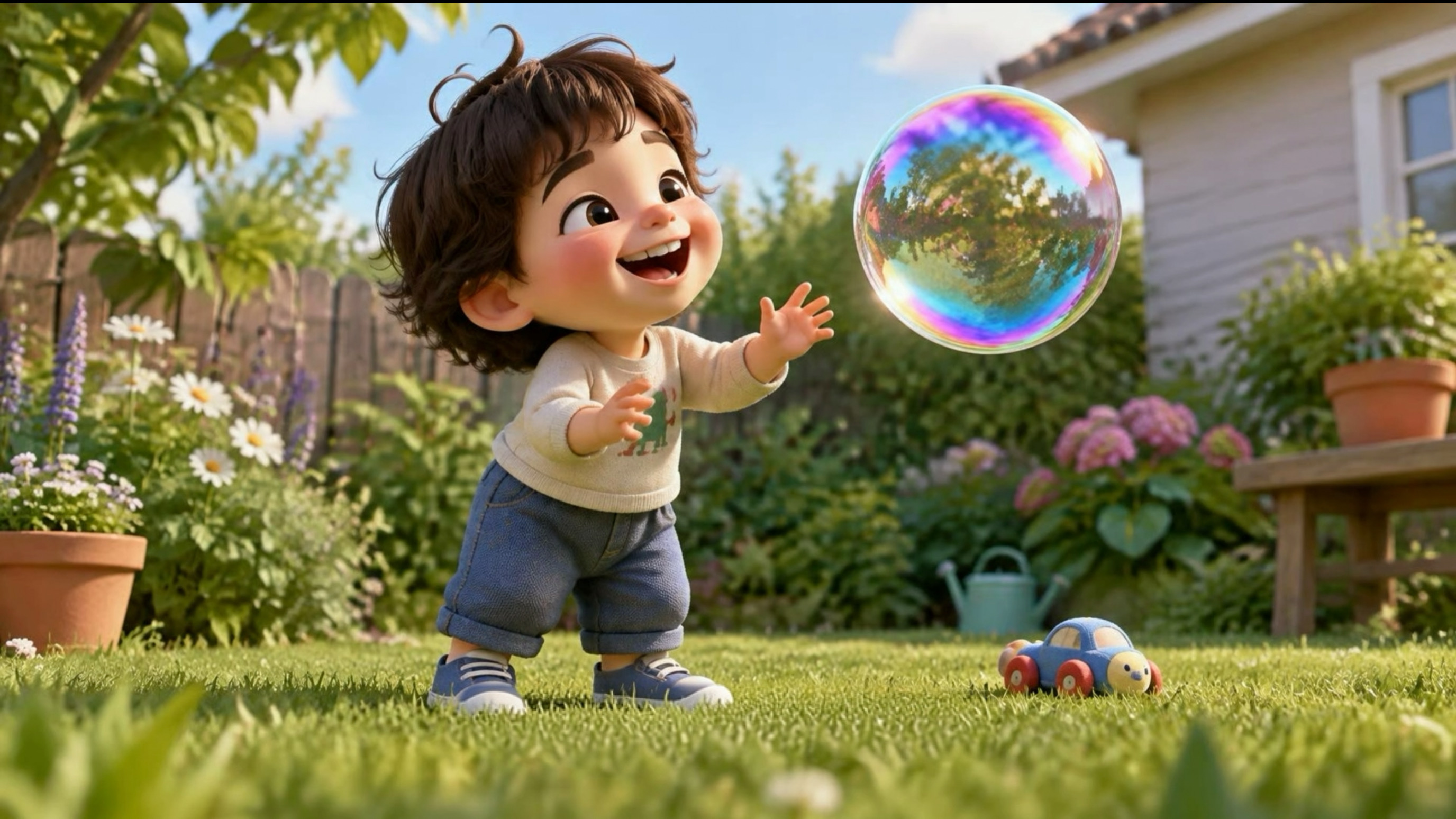
Around nine on a Thursday night, someone says something so precisely absurd that the laugh gets out before you've decided anything. It's too loud. It folds you at the waist, and for a few seconds you aren't managing your face, your reputation, or the meeting at ten tomorrow.
Then it runs out, and your eyes make a quick scan of the room. You check who heard, whether it was too much, whether it was the right laugh at all. At seven or eight you ran no such check. The laugh used your whole body, arrived without asking, and ended when it was finished. Most of us still laugh plenty in an ordinary week, and most of us would struggle to laugh like a child, all the way down, with no scan of the room afterward.
This piece follows that laugh back toward the child who kept it, and borrows the child's viewpoint to look at laughter, wonder, and the plain fact of being alive. It can't promise a return to the playground, and it won't hand you a schedule for joy. It can offer a way of looking, which may be enough to begin with. The first piece in this series described how the mind builds other viewpoints from its own library of experience, and the child you were is among the oldest shelves in yours.
What it means to laugh like a child
Watch a four-year-old at a sprinkler and you'll see a laugh that isn't about anything an adult mind would call funny. Cold water arrives, unannounced, and the whole child answers it: shoulders, voice, knees. Nothing in the laugh is for anyone else. Nothing is held back for later. It starts in the body and the body finishes it, and the child is entirely inside it, with nothing left over for commentary.
What makes that possible, I suspect, is where the child's mind is standing. Nothing else is competing for the room. The child at the sprinkler isn't rehearsing tomorrow's conversation or replaying yesterday's, so the laugh has no rival for the attention it needs. Adults arrive in the same moment carrying a second place in their heads, and a laugh that lands in a divided mind gets divided too. Part of it happens, and part of it is monitored.
The research suggests that a divided mind is closer to our default than our exception. When Harvard psychologists Matthew Killingsworth and Daniel Gilbert pinged more than two thousand adults at random moments through the day, minds had left the task at hand in nearly half of the answers, 46.9 percent, and people reported lower moods when that had happened, whatever they were doing. Their timing data suggested the wandering came first and the unhappiness followed. A child's laugh gets the attention it needs because the child hasn't learned to be elsewhere.
Reason suggests the traffic runs both ways. Presence makes the laugh possible, and a real laugh pulls you into presence, if only for a few seconds, because nobody can laugh with their whole body while drafting an email in their head. To laugh like a child is to let yourself stand where your body already is, and to let the moment speak first.
Most of us can still find that laugh in the right company. It shows up with an old friend, usually late, usually over something that's barely a joke at all, and it leaves you wheezing and a little embarrassed at how long it lasted. The conditions tend to match the child's: nothing to prove, nowhere else to be, and someone nearby who won't keep score.
Wonder over familiarity
Somewhere in adulthood, the world gets categorized. The commute becomes routine, the neighbor's dog becomes background, the weather becomes something to check, and once a thing is familiar it stops asking for your attention. A sudden downpour is a small disaster for the adult carrying groceries and the best event of the week for a seven-year-old. Same rain, different expectations. Familiarity saves effort, which is its job, and it also saves us from noticing most of what happens to us.
A child hasn't finished categorizing. Everything still arrives as itself, the puddle as a puddle and not as a threat to the shoes. A child's attention behaves like water, taking the shape of whatever it's poured into: a puddle, a joke, a stranger's hat. I suspect that's why a child can find the same game funny for the nineteenth time. For an adult, familiarity is a signal to stop looking. For a child it's an invitation to look closer, because the child is still finding out what a thing can do.
Cynicism is what a fully sorted world feels like from the inside, and it arrives with a flattering story: the person who expects the least is the person seeing most clearly. I understand the appeal. Expecting less protects you from the sting of being let down, and a few disappointments in a row can make the protection feel like wisdom. A mind that has labeled everything in advance can't be surprised, though, and surprise is where wonder lives. In my experience, the people who see the most tend to be the ones still curious about what's in front of them.
Wonder can't be ordered back, and I'd distrust anyone who says it can. Reason suggests something gentler. Something unfamiliar can still break through: a sentence that doesn't fit, a stranger's odd kindness, a downpour that arrives on a day you forgot to be braced for. When that happens, you may find the old attention was there all along, waiting for something it couldn't predict.
Freedom from performance
Children laugh because something is funny. Adults laugh for a longer list of reasons, and the funniest thing in the room is often far down it. We laugh to be agreeable, to signal that we meant no harm, to rescue a story that's going badly. These laughs do real work, and some of the kindest moments in a day depend on them. The polite laugh at a colleague's story is a small gift.
The trouble starts when the managed laugh becomes the only one we use. I suspect it gets practiced so often that it crowds out the other kind, until you're no longer sure which one just left your mouth. A laugh edited on its way out carries a little less of the person, and the person can feel the difference even when nobody else can.
Underneath the editing sits a belief about being watched, and the belief runs larger than the room. When Cornell psychologist Thomas Gilovich and his colleagues sent students into a room of their peers wearing a T-shirt they found mortifying, the wearers guessed that far more people had noticed than actually had. The first piece in this series described how confidently the mind models other minds, and the audience you imagine watching you laugh is one of those models. Reason suggests it's assembled from your own self-consciousness, and that it tends to be harsher and more attentive than the real people in the real room, who are mostly busy wondering how they look to you. Attention is finite, so every bit spent on how you look is taken from whatever made you laugh. A lamp aimed at your own face leaves the rest of the room dark, including the funny thing.
Children haven't built that audience yet, or haven't built a severe one, so a laugh meets no editor on its way out. The polite laugh stays a gift. The invitation is to notice, now and then, which laugh just happened, and to leave a little room for the other kind, the one that has nothing to do with how you look while it's happening.
Gratitude for being alive as a baseline
A seven-year-old wouldn't call it gratitude. The word belongs to adults, who have something to compare against. The astonishment is easy to recognize anyway: the cold shock of a swimming pool, the taste of watermelon, a body that can run until it's out of breath and then laugh about being out of breath. Being alive is the condition of everything the child does, and it makes the ordinary vivid.
Adults tend to meet gratitude as an assignment: three things before bed, a list on the refrigerator. Those practices can help, and I'd never talk anyone out of them. A gratitude produced on purpose and a gratitude that arrives on its own are different experiences, though, and most of us know which one we're having. The effortful kind asks you to find reasons. The spontaneous kind is what's left when nothing is pulling your attention away from the fact that you're here. Call it a baseline: the place attention returns to when nothing else is calling.
I suspect baseline gratitude fades for the same reason the rest of the world gets categorized. Anything that's always there fades into the background. You stop hearing the refrigerator, and you stop noticing the breath that has never once failed to arrive. Comparison brings it back, and the sharpest comparisons tend to come from loss: the week after a flu, when climbing the stairs feels like a gift, or the morning after a scare that turned out to be nothing.
You don't need a loss to feel the difference. Right now, without any instruction from you, your lungs are working, your eyes are turning light into a room, and your hands know where they are. All of it was given at seven. All of it is still given. In my experience, the feeling arrives when you let one ordinary fact be as large as it actually is.
Practicing this tends to look ordinary from the outside. You put the phone down at the table. You stand a moment longer at the window. You notice that the soup is hot and that you're glad of it. None of it announces itself, and all of it counts.
Someone at eighty would likely give a great deal for an ordinary afternoon in a body like yours, a little tired, a little behind, laughing at something small. I can't prove that, and I'd rather offer it as something to wonder about than a reason to feel grateful on command. The child at seven holds the astonishment, the elder at eighty holds the memory of it, and you're standing between them with the afternoon in your hands.
Holding the heaviness
Children carry heavy things too. A seven-year-old can cry hard over a goodbye or a scraped knee and be laughing within the hour, and the second feeling doesn't cancel the first. Each one gets its full weight while it lasts, and then it moves along. Adults tend to expect a different order, with grief clearing the room before any lightness is allowed in, and a laugh in the wrong week can feel like a betrayal.
Many of us have been to a funeral where the room went quiet and then, over a story about the person's terrible driving, broke into laughter that felt like relief and love at the same time. Nobody there thought the person mattered less. The laugh carried the grief and didn't escape it. Reason suggests laughter and sorrow can share a room, since both are ways of staying in contact with something that mattered.
The same capacity is available in hard seasons: holding the whole picture without being flattened by any one corner of it. Cheerfulness can't be forced, and forced cheer usually rings false to the person performing it and to everyone near them. What can happen is smaller. Something absurd arrives in a heavy week, and you let it in without putting it on trial.
Some seasons are heavy enough that laughter won't come, and it shouldn't be summoned. If the weight has kept joy out of reach for a long while, a therapist is a chosen kind of company, and reaching for one is a reasonable thing to do for yourself. Laughter and gratitude can coexist with heaviness without shrinking it.
Practicing childlike joy on an ordinary day
Childlike joy tends to turn up on ordinary days, which is fortunate, since ordinary days are the ones we have. I suspect it's easiest to build in calm moments for the reason any skill is: little is at stake, so there's room to notice what's happening while it happens. A quiet afternoon teaches more than a crisis does.
Consider a fifteen-minute walk somewhere with a little sky, phone in your pocket. Before you leave, bring the seven-year-old you to mind, the one from your photographs and family stories, and let that child choose what you stop for. A crack in the sidewalk where something green is pushing through, a dog who is completely certain about a smell, light coming through wet leaves. Stop where they'd stop. Once, notice the air going in. If something strikes you as silly, let the laugh come out at full size, even with nobody around to hear it, and see how it feels to let it run all the way to the end before you check on it.
It might feel awkward for the first few minutes, and that's ordinary. Awkwardness is a sign you're watching yourself, and it usually fades when something outside holds your interest more than you do.
Some days nothing happens, and that's a fair result too. The aim of a walk like this is attention, and a laugh may or may not turn up. A walk with nothing funny in it can still end with a clearer sense of the afternoon you're in.
The long baseline practice from the earlier piece asks the seven-year-old what they think of your hardest choices. Here the question is smaller and kinder: what do they find funny today? I suspect most of us laugh more in company than alone, so the simplest extension may be an afternoon with someone who makes the laugh easy, and who lets it be as loud as it wants to be.
An ordinary afternoon
Most of what we've looked at lives in small, unglamorous places: the half-second scan of the room after a laugh, the familiar things we've stopped noticing, the breath that arrives without being asked. It takes a few minutes of attention that hasn't wandered off to tomorrow, and a little permission to be seen laughing at something that isn't all that funny.
Living intentionally includes this part, the part that can't be scheduled. You can choose where to point your attention, who to spend an afternoon with, and which of your laughs to let out unedited. The joy itself arrives on its own terms, which may be why it still feels like a gift.
The child at seven laughs without a scan of the room. The elder at eighty, if the years have been kind, laughs without one too, having set the audience down after a lifetime of carrying it. You live between those two laughs, and some version of each is within reach today.
Somewhere down the road, a person who has laughed and grieved for a very long time is thinking about an ordinary afternoon, and it might be this one. Which part of it will they be holding onto?
Keep reading
- The Zeus in You: Why the Old Gods Still Describe the Mind
- Why I Am Guilty of Having No Shame
- The Unflappable You: How to Stop Letting Others Ruffle Your Feathers
- Don't Assume the Worst; Talk to Me About It First
- Possible vs. Probable: Why the Difference Shapes a Life
- Why Old Advice Suddenly Makes Sense Years After You Heard It
- Accept Belonging & Belong Acceptance
- Marcus Aurelius and Rumi: Two Paths to the Same Peace