The Cheapest Word Available: How Digital Communication Thins Empathy
Joseph Kelly explores how digital compression shrinks emotional vocabulary and empathy, drawing on research from Barrett, Konrath, and Gallese.
| Communication, Social Intelligence, Emotional Intelligence, Empathy, Cognition | 13 min read
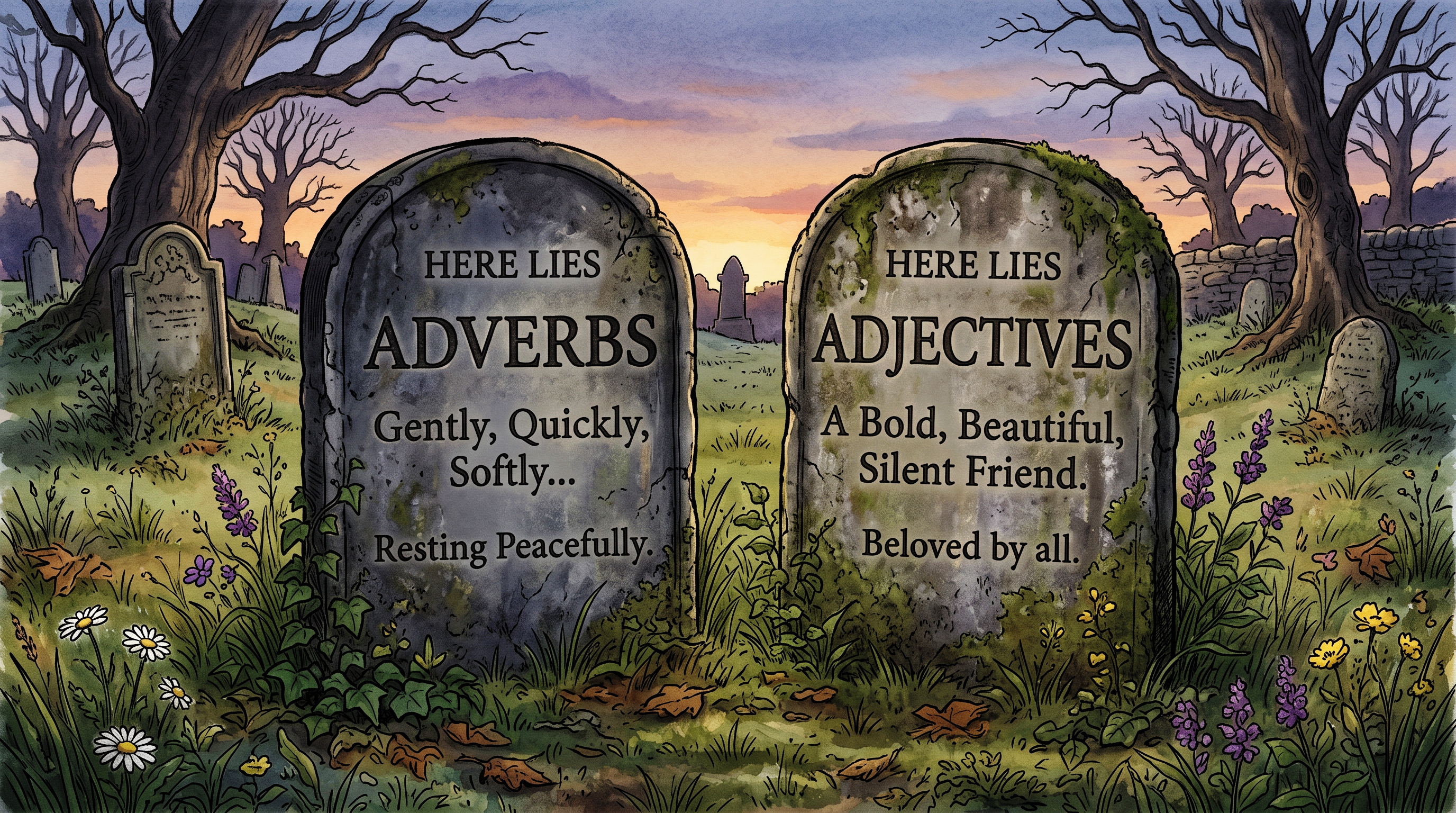
Think of the last time you typed "fine" when you meant something closer to disquieted, or wrote "lol" to soften a sentence that actually carried some real hurt in it. You knew, somewhere underneath the reflex, that the word didn't match the feeling. But the message needed to go out, the moment needed to be handled, and "fine" was sitting right there, cheap and ready. Multiply that small compromise by the hundreds of digital exchanges most of us move through in a given week, and you start to see the outline of something larger than a vocabulary habit. You start to see a structural shift in how we relate to our own inner lives and to each other.
That shift has a name in information theory: compression. In its original technical sense, compression means representing information using fewer bits than the original data requires, a lossy shortcut that trades some fidelity for speed and efficiency. Applied to human thought and communication, the same logic holds. As digital demands consistently outpace the cognitive architecture we evolved with, an abundance of information produces what researchers increasingly describe as a poverty of attention. Under that sustained strain, compressed communication doesn't emerge as a personal failing. It emerges as the default setting of a mind trying to keep up.
This matters well beyond questions of style or etiquette. The compression of language and the compression of feeling are not separate phenomena moving on parallel tracks. They are entangled, each one reinforcing the other, and the consequences show up in three distinct but connected registers: the shrinking of our emotional vocabulary, the erosion of empathic connection, and a kind of defensive withdrawal that has started to reframe emotional depth itself as a liability. Understanding how these three registers work, and how they feed each other, offers something more useful than alarm. It offers a way of seeing clearly what's actually happening, which is usually the necessary first step before anything can shift.
The shrinking of emotional vocabulary: from granularity to blunt shorthand
Consider the arc of communication media over the last century and a half: handwritten letters, then telephone calls, then email, then text messages, then character-limited platforms where a single tap of a reaction emoji can substitute for an entire sentence. Each transition has stripped away another layer of pacing, vocal texture, and nuance. What's left, increasingly, is brevity treated not as a stylistic choice but as a structural mandate baked into the medium itself.
The linguist George Kingsley Zipf described this tendency decades ago as the principle of least effort, a term for the universal pressure in any communication system toward the shortest, easiest form available. Historically, this pressure toward laziness was checked by a countervailing force: the listener's need for precision. If you spoke too vaguely, you'd be misunderstood, and misunderstanding carried real social and practical costs. Digital text quietly dissolves that check. Composing and sending a message now costs the sender almost nothing, while the reader absorbs the cost of any resulting imprecision silently, often without even registering that a cost was paid. Over time, this imbalance accelerates a process the linguist Georg von der Gabelentz called semantic bleaching, in which vivid, specific words wear down into vague, generic shrugs. "Awful" once meant full of awe. "Weird" once meant governed by fate. Both decayed, through centuries of least-effort substitution, into words that mean little more than "bad" or "strange."
This isn't merely a historical curiosity confined to etymology dictionaries. Empirical research analyzing more than 300 million English-language comments across major digital platforms over nearly 34 years has documented a steady, measurable decline in both message length and vocabulary richness. Rather than reaching for words with real descriptive precision, such as wistful, forlorn, rueful, chagrined, or acrimonious, casual digital communication increasingly defaults to a narrow set of blunt intensifiers: good, bad, fine, crazy, insane, stressed. The available emotional palette hasn't just narrowed in formal or professional contexts. It has narrowed in the exact spaces, personal messages, casual check-ins, where nuance would seem to matter most.
Here is where the consequences move from linguistic to genuinely psychological. Research led by the psychologist Lisa Feldman Barrett on what she and her colleagues call emotional granularity demonstrates something counterintuitive: language doesn't simply describe feelings after they've already formed. Word accessibility actively shapes emotional perception in real time. People who can distinguish between, say, disappointment, resentment, and grief experience a meaningfully different internal landscape than people whose vocabulary collapses all three into "bad." Differentiated emotion labels point toward differentiated, appropriately calibrated responses, which in turn supports better distress regulation and faster recovery from difficult states. A person who can name resentment specifically has a clearer path toward addressing its actual source than a person who can only register a diffuse, unlabeled badness.
What happens, then, when rich emotional language goes consistently unexercised under time pressure? The honest answer is that the capacity for nuance doesn't vanish overnight, but it does quietly atrophy, the way any underused capacity does. A mind that's grown accustomed to blunt labels gradually develops a blunter internal landscape to match, not because the underlying emotional complexity has disappeared, but because the tools for perceiving and naming that complexity have gone dull from disuse. This is worth sitting with for a moment, because it reframes something that might otherwise seem like a minor communication inconvenience as a question of genuine psychological consequence. The words available to you are not neutral packaging around feelings that exist independently. They're part of how those feelings become perceptible to you in the first place.
The erosion of empathy: how compressed signals degrade connection
What begins inside an overloaded individual mind, a search for the cheapest available word, doesn't stay contained there. It travels outward into relationships, into the texture of how people actually attend to one another, and eventually into the capacity for empathy itself.
The communication researchers Richard Daft and Robert Lengel offered a useful framework for understanding why this happens, one they called media richness theory. Face-to-face conversation, in their account, is a "rich" medium, carrying tone, timing, facial expression, and vocal inflection all simultaneously and in real time. Plain text, by contrast, is a "lean" medium, stripped of nearly all of those cues, leaving only the words themselves to carry the entire weight of meaning. This distinction sounds almost obvious once stated, but its implications run deeper than most people assume.
Research conducted by the psychologists Justin Kruger and Nicholas Epley reveals something they termed tone overconfidence, a systematic gap between how clearly people believe their intended tone comes through in text and how clearly it actually does. Senders consistently overestimate how well their humor, warmth, or sarcasm will land. Recipients, meanwhile, are equally overconfident that they've correctly interpreted what was meant, even when they haven't. In reality, tone in text comes through accurately in barely half of exchanges, a figure that should give anyone pause given how much of daily relational life now happens through exactly this lean, tone-ambiguous channel. Perhaps most counterintuitively, closeness offers no real protection against this gap. If anything, familiarity with someone can make people more confident, and therefore more prone to unchecked misreading, precisely because they assume shared context will fill in what the text leaves out. Consequently, compressed text often causes its worst damage not among strangers but within intimate relationships, where exact meaning matters most and the assumption of mutual understanding runs highest.
Beyond this immediate risk of misattunement lies a more structural concern, one documented in a landmark cross-temporal meta-analysis led by the social psychologist Sara Konrath. Combining data from 72 separate studies of American college students conducted between 1979 and 2009, Konrath and her colleagues tracked scores on standardized empathy measures across three decades. What they found was a sharp, notably steep drop beginning around the year 2000, with students studied after that point scoring roughly 40 percent lower in dispositional empathy than their counterparts from two decades earlier. The decline wasn't distributed evenly across every dimension of empathy either. The steepest drops occurred specifically in empathic concern and perspective-taking, the exact subscales responsible for registering another person's inner life as real, as mattering, as worth the effort of responding to.
Konrath attributed this decline directly to the sheer volume of undifferentiated digital information competing for attention, information that consumes the very attentional bandwidth genuine empathy requires. This finding challenges a common assumption worth naming explicitly: the idea that empathy functions as some kind of automatic, low-cost reflex, something that simply happens whenever two people are near enough to each other. It doesn't. Empathy requires sustained, effortful attention, a willingness to submerge, at least briefly, into another person's experience rather than processing them as one more input to be efficiently handled. When attention is chronically divided, thinned across dozens of simultaneous demands, that submersion becomes structurally difficult regardless of how much a person might value connection in principle.
None of this means empathy has been erased or that individual people have become less caring in some essential, permanent sense. What it suggests, rather, is that the conditions required for empathy to fully activate have become scarcer, squeezed out by an information environment that rewards speed and quantity over depth and presence. That's a meaningfully different, and somewhat more hopeful, claim than saying people have simply changed for the worse. It points toward environmental and structural factors rather than character flaws, which in turn opens up the question of what might be done differently, rather than simply cataloging a loss.
Defensive withdrawal and the myth of empathy as weakness
When emotional depth becomes uncomfortable or genuinely difficult to sustain under this kind of attentional strain, people and entire cultures tend to develop defensive adaptations. Over time, these adaptations can normalize a certain coldness, reframing it as simply how things are now rather than as an adaptation with real costs.
Attachment researchers describe one such adaptation as a deactivating strategy: a pattern in which individuals systematically minimize closeness, suppress their own attachment needs, and calibrate their relational style to stay close but never too close. This isn't necessarily a conscious decision so much as a protective reflex, one designed to guard against the vulnerability inherent in being misunderstood or rejected. If genuine closeness carries real risk, and if the attentional cost of maintaining it feels increasingly unaffordable, then distance starts to look less like a loss and more like a reasonable accommodation.
The sociologist Zygmunt Bauman offered a useful image for this broader cultural shift, describing it as liquid modernity, a condition he characterized memorably as "water without gravity." In Bauman's account, contemporary relational life increasingly consists of restless, perpetual surface motion, movement that never pools long enough in one place to allow deep, submerged feeling or durable commitment to take root. Practices like ghosting, abruptly and silently ending contact rather than addressing a relationship's end directly, become accepted defaults within this liquid environment precisely because coldness spares the person choosing it from the effortful discomfort of registering another person's grief. It's a strategy that trades short-term relief for a longer-term erosion of relational trust and depth, though that trade-off often isn't visible until well after the pattern has become habitual.
This cultural moment has also produced a more explicit and, frankly, more troubling development: public discourse in which empathy itself gets framed as a civilizational liability, an exploitable weakness that a sufficiently rational person or society ought to override. This framing deserves a careful, honest look, because it represents a genuine claim about human nature that's worth examining rather than dismissing outright.
Here, neuroscientific research runs directly counter to that framing. The neuroscientist Vittorio Gallese's work on what he termed embodied simulation, alongside the broader body of research on mirror neuron systems, demonstrates that when a person witnesses another's emotional or physical state, their own physiological and neural systems activate shared representations of that state. In other words, some meaningful portion of empathy isn't a learned social nicety layered on top of a fundamentally self-interested nervous system. It's original equipment, wired into the architecture of human cognition from the ground up. Framing it as a bug to be patched over misunderstands what the research actually shows: empathy functioning not as an evolutionary accident or a removable glitch, but as a core feature of how human brains process the presence of other minds.
This distinction matters enormously for how we think about the compression problem as a whole. If empathy really were simply an optional social convention, then its erosion under attentional pressure might be regrettable but ultimately manageable, a preference lost rather than a capacity damaged. But if empathy is instead something closer to a core cognitive function, comparable in some ways to memory or language itself, then its systematic underuse carries a different weight entirely. It suggests not a shift in values but a genuine narrowing of human capacity, one that happens gradually enough to go largely unnoticed until the gap becomes difficult to ignore.
Where the three registers converge
Taken together, these three registers, the shrinking of emotional vocabulary, the erosion of empathic attention, and the defensive reframing of depth as weakness, describe a single continuous process rather than three unrelated trends. An overloaded mind reaches for the cheapest available word. That cheap word, repeated across enough exchanges, bypasses the pause in which perspective-taking would otherwise occur, the small but essential gap between receiving a message and constructing a genuinely considered response. Over time, the habit of skipping that pause generalizes, moving from language use into the broader capacity for registering another person's inner life as real and worth the effort of full attention. The resulting cycle moves, fairly directly, from compressed language to thinned feeling, and ultimately toward a cultural environment in which human depth increasingly gets experienced as an inconvenience rather than as one of the primary goods that make relational life worth having.
It would be a mistake, though, to read any of this as an argument that digital communication itself is simply bad, or that texting represents some kind of moral failure requiring correction. The pressures described here are structural, arising from genuine mismatches between an information environment evolving at extraordinary speed and a cognitive architecture that evolved under very different conditions. Recognizing a pattern as structural rather than personal is itself useful, because it shifts the relevant question. Instead of asking what's wrong with you for defaulting to "fine" or feeling depleted after a day of fragmented digital contact, the more accurate question becomes: what conditions make richer language and deeper attention more or less available, and where do you actually have some room to work with those conditions?
One place that room exists is in noticing, without judgment, when a blunt word has been substituted for a more precise one, and pausing long enough to ask what the more precise word might actually be. This isn't a discipline of constant self-correction, which would simply add another layer of effortful strain to an already strained system. It's closer to an occasional practice of curiosity, treating your own vocabulary as worth examining rather than assuming its current shape is fixed or final. Emotional granularity research suggests this kind of attention, applied even inconsistently, can genuinely expand the internal landscape available to you over time, precisely because naming shapes perceiving rather than simply following after it.
Another place that room exists is in choosing, deliberately and selectively, which conversations deserve a richer medium. Not every exchange needs a phone call or an in-person conversation, and treating every interaction that way would be its own kind of unsustainable demand. But some conversations, the ones carrying genuine emotional weight, genuinely benefit from a medium that can carry tone, pacing, and presence rather than asking bare words to do that work alone. Media richness theory doesn't argue that lean channels are inherently inferior. It argues that different channels suit different communicative purposes, and that part of communicating well involves matching the medium to what actually needs to be conveyed.
A third place, perhaps the least discussed, involves questioning the framing of empathy as weakness whenever it surfaces, whether in public discourse or in the quieter, more private moments when withdrawing from someone's pain feels like the easier and more protective option. Gallese's research on embodied simulation offers a useful anchor here: the discomfort involved in registering another person's difficulty is not evidence that something has malfunctioned. It's evidence that the shared-representation system built into human cognition is functioning exactly as it evolved to. The discomfort is data, not a defect, and treating it as such changes what withdrawal actually costs.
What stays possible
None of this points toward a clean fix or a guaranteed reversal, and it would be dishonest to suggest otherwise. Growth in this territory, like most genuine psychological growth, tends to be incremental and recursive rather than linear, a matter of noticing a little more often, over time, rather than solving the problem once and moving on permanently changed. The structural pressures toward compression aren't going away. If anything, the pace of digital communication seems likely to keep accelerating rather than easing.
But the research explored here also suggests something worth holding onto alongside that honest acknowledgment. Emotional granularity can be rebuilt, gradually, through attention rather than effort alone. Empathy, being original cognitive equipment rather than a fragile social nicety, remains available underneath the defensive adaptations that sometimes obscure it. And the capacity to notice compression happening, in your own language, in your own relationships, in the broader cultural conversation, is itself a meaningful form of resistance to a process that otherwise operates largely below the threshold of conscious awareness.
What would it mean to treat the specific word as worth the extra half second it takes to find, not as a matter of correctness, but as a way of keeping your own internal landscape legible to yourself? And what would it mean to treat someone else's slow, imprecise, or poorly timed message not as an irritation to be efficiently processed, but as a signal arriving through a genuinely lean channel, carrying more than the bare words can show? These aren't questions with clean answers. They're questions worth carrying with you into the next conversation, the next message, the next moment when the cheapest word sits right there, ready, and something slightly truer waits just one beat further on.
Keep reading
- The Zeus in You: Why the Old Gods Still Describe the Mind
- Why I Am Guilty of Having No Shame
- The Unflappable You: How to Stop Letting Others Ruffle Your Feathers
- Don't Assume the Worst; Talk to Me About It First
- Possible vs. Probable: Why the Difference Shapes a Life
- Why Old Advice Suddenly Makes Sense Years After You Heard It
- Accept Belonging & Belong Acceptance
- Marcus Aurelius and Rumi: Two Paths to the Same Peace